


Appointment System in Malaysia
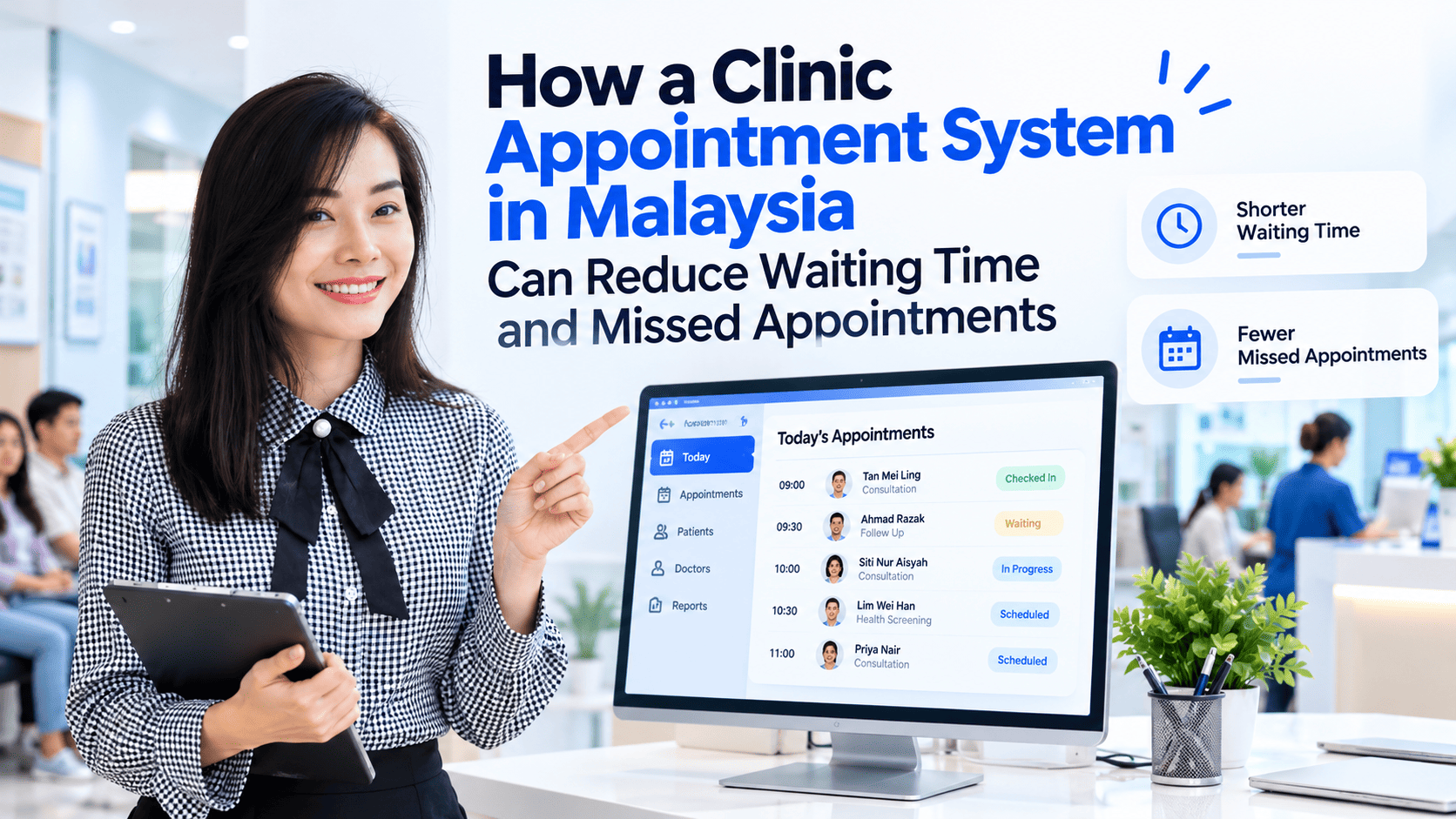
How a Clinic Appointment System in Malaysia Can Reduce Waiting Time and Missed Appointments
Long waiting times, missed appointments, and overcrowded reception areas can make clinic management challenging. For healthcare providers in Malaysia, managing appointments efficiently is important for maintaining a smooth workflow and delivering a better patient experience.
Traditional appointment books, phone calls, and manual scheduling can become difficult to manage as patient numbers increase. A digital clinic appointment system helps clinics organize bookings, monitor schedules, and coordinate daily operations more efficiently.
But how does clinic appointment software work, and how can it help Malaysian clinics reduce unnecessary waiting and missed appointments?
But how does clinic appointment software work, and how can it help Malaysian clinics reduce unnecessary waiting and missed appointments?
Let’s explore.
- What Is a Clinic Appointment System?
A clinic appointment system is software that helps healthcare providers schedule, manage, and monitor patient appointments from a centralized platform.
Instead of relying entirely on paper registers or separate spreadsheets, clinics can use digital scheduling tools to maintain appointment records and coordinate their daily schedules.
A modern clinic appointment system may include:
- Digital appointment scheduling
- Patient registration and appointment records.
- Doctor availability and schedule management.
- Appointment reminders and notifications.
- Rescheduling and cancellation management.
- Integration with patient management and electronic medical records.
The exact features depend on the software and its configuration.
For clinics in Malaysia, a suitable system should support the clinic’s workflow, patient volume, and operational requirements.
5 Ways Clinic Appointment Software Improves Daily Operations
- Reduces Scheduling Conflicts
Manual scheduling can lead to overlapping appointments, incorrect time slots, or confusion about doctor availability.
Clinic appointment software provides a centralized view of scheduled appointments, helping reception teams identify available time slots and manage bookings more consistently.
This is particularly useful for clinics with multiple doctors, consultation rooms, or different appointment types.
- Helps Reduce Missed Appointments
Missed appointments can disrupt the daily schedule and leave valuable consultation time unused.
Depending on the system, automated reminders can help patients remember their upcoming appointments. Clinics can also establish consistent procedures for confirming, cancelling, and rescheduling bookings.
Although reminders cannot eliminate no-shows entirely, they can help reduce avoidable missed appointments.
- Improves Patient Waiting Time Management
Patient waiting time can increase when appointment schedules are poorly coordinated or consultations take longer than expected.
A digital appointment system helps staff see the day’s schedule, identify delays, and manage upcoming appointments more effectively.
When appointment scheduling is connected with patient registration and other clinic workflows, staff can also coordinate patient preparation more efficiently.
The result: better visibility into daily operations and a more organized patient experience.
4. Supports Better Doctor Scheduling
Clinics need to coordinate doctor availability, consultation hours, leave schedules, and different types of appointments.
A centralized scheduling system helps staff manage these requirements without relying on multiple disconnected records.
For specialist clinics and multi-branch healthcare businesses, this visibility can be especially valuable when several practitioners have different schedules.
5. Simplifies Patient Record Management
Appointment scheduling is more useful when it works alongside patient management.
When the system supports this functionality, staff can access relevant patient details and appointment history without repeatedly searching through separate records.
This can reduce repetitive administrative work and help the clinic maintain more consistent records.
Manual Appointment Book vs Digital Clinic Appointment System
Feature | Manual scheduling | Digital appointment system |
Appointment records | Paper-based | Centralized digital records |
Schedule visibility | Requires manual checking | Easier to review |
Appointment reminders | Usually manual | May be automated |
Rescheduling | Requires manual updates | Can be managed digitally |
Reporting | Manual compilation | May provide reports |
Multi-doctor coordination | Can become complex | Centralized scheduling options |
The right solution depends on the clinic’s size, patient volume, and workflow. A small practice may have simple scheduling needs, while a larger clinic may require more advanced coordination.
- What Should Malaysian Clinics Look for in Appointment Software?
Before selecting a clinic appointment system in Malaysia, consider these important factors:
- Ease of use: Staff should be able to manage appointments without unnecessary complexity.
- Patient management: Appointment records should work with the clinic’s wider patient workflow.
- Doctor scheduling: The system should accommodate different practitioners and consultation hours.
- Reminders: Check whether appointment notifications are available and how they are delivered.
- Reporting: Useful reports can help clinics understand booking patterns and operational bottlenecks.
- Scalability: Consider whether the software can support additional doctors or branches as the clinic grows.
- Data security: Review access controls, data protection practices, and backup arrangements.
The best clinic appointment software is not necessarily the one with the most features. It is the one that fits the clinic’s actual operational needs.
How Clinica ERP Can Support Clinic Appointment Management
Clinica ERP provides a clinic software solution for healthcare practices looking to organize their operations through digital systems.
Clinics evaluating a solution can explore how appointment management fits alongside broader workflows such as patient management, electronic medical records, billing, and other administrative functions.
By evaluating these workflows together, healthcare providers can make a more informed decision about how to reduce fragmented processes and improve operational visibility.
Explore the Clinica ERP Clinic Appointment System for Malaysia to learn more about the solution.
Conclusion
Efficient appointment management helps Malaysian clinics make better use of their time, coordinate staff schedules, and deliver a more organized patient experience.
A suitable clinic appointment system can support these goals by reducing manual scheduling work, improving appointment visibility, and helping staff manage cancellations and reminders.
For clinics planning to digitize their operations, evaluating appointment software alongside patient management and other essential workflows is a practical first step.
Looking to improve appointment management at your clinic? Explore Clinica ERP and assess how its clinic software can support your operational needs.
- Frequent Asked Questions
What is the best clinic appointment system in Malaysia?
The best system depends on the clinic's size, appointment volume, number of doctors, required integrations, budget, and reporting needs. Clinics should compare available features and request a demonstration before choosing a solution.
Can clinic appointment software reduce patient waiting time?
It can help clinics coordinate schedules, manage bookings, and identify delays. Actual improvements depend on appointment planning, consultation duration, staffing, and how consistently the software is used.
Does clinic appointment software send automatic reminders?
Some systems offer automated appointment reminders through supported communication channels. Clinics should verify the available reminder methods and any additional costs before purchasing.
Is appointment software suitable for small clinics?
Yes. Small clinics can benefit from centralized scheduling and digital records, provided the system is appropriate for their requirements and budget.
Can appointment management work with electronic medical records?
Yes. Some clinic management systems integrate appointment scheduling with electronic medical records and patient management, helping clinics coordinate administrative and clinical workflows.
- Contact Us
Clinic management system for Malaysian GP clinics
Queue, EMR, billing, panel claims, inventory, payroll and LHDN e-Invoice in one cloud system. From RM49 per clinic per month, billed yearly.
Book a Free DemoSee the Clinica ERP appointment and queue system →